Hello and welcome to The Index Investor. The most passive portfolios, they begin with large-cap index funds. They’re simple, liquid, and familiar. But what about the rest of the market? Small and mid-cap stocks are often seen as the engines of growth, but also as a source of sharp volatility. So the big question for passive investors is, should you go beyond large caps at all? And if yes, how?
And to break this down, we’re joined by Mehran Felfly of Ethics. Welcome, Mehran. Thank you so much, Ruchira. Very good afternoon to you. Thank you so much for having me here. Great to have you here.
So let’s start with the basics. How are small-cap and mid-cap indices actually built and how do they differ from large-cap indices in practice?
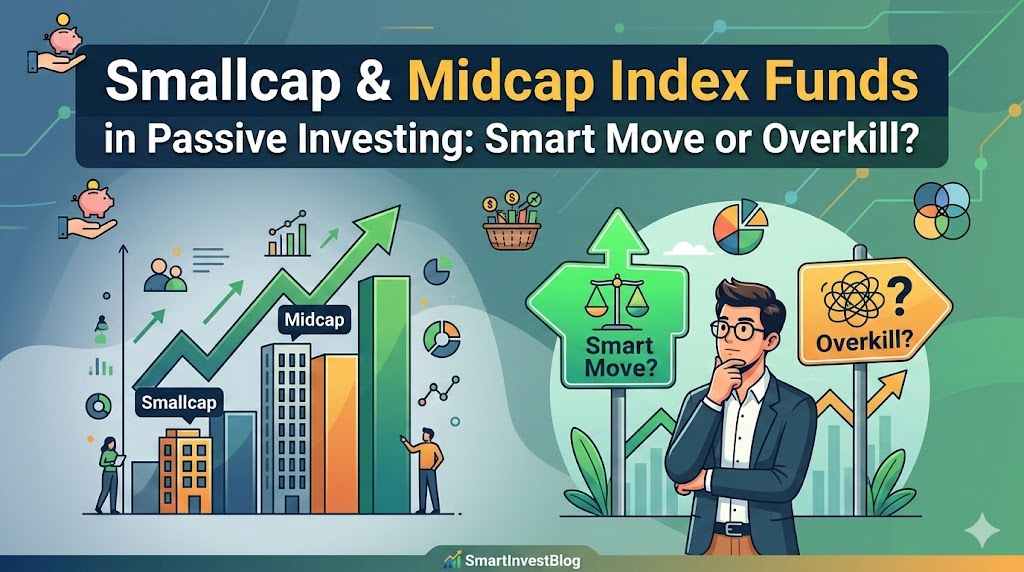
All right, so the best part about passive investing is you admit that you don’t know about tomorrow and still charge less for the honesty. On a lighter note, basically, passive index don’t attend TV debates and still beat 50% of the portfolios. So in very plain vanilla language, mid-cap index is nothing but barring the top 100 companies, the 101st company onwards, till the 250th company as per the market cap. In simple words again, what is market capitalization? It’s nothing but the free float of shares publicly traded multiplied by the price per share.
So mid-cap predominantly will be industries which are more in the ancillary space, in the specialized manufacturing space, and these are emerging businesses. Yes, volatility will be higher in this space for sure. And because of the low base effect, when earnings come out, whether up or down, it’s going to have an impact on the overall revenue, which can make it extremely volatile in this space. Liquidity can be a kind of a concern because of the sheer size. And very importantly, they will be more sensitive to economic cycles and volatility.
Now coming down to the small-cap space, barring the 250 companies, the 251st company till the 500th company as per the market cap, these are the niche segments. This is basically businesses which are at its very early nascent stage. They will be bearing more higher volatility and liquidity can be a concern in this space. They are the toddlers basically, which are going to be the future teenagers in the mid-cap space and then become grown-up matured men and women in the blue-chip space. Yes, volatility and liquidity is something you need to keep an eye on that.
So small caps and mid caps, they’re often described as high growth but high risk, as you also mentioned, high volatility. So if someone invests in these segments passively, what should they realistically expect over a full market cycle?
Okay, so expectation is something which is a bit of a challenge right now because of the euphoric returns we’ve seen over the last five years. That’s right. Let me be brutally honest. Market does not care about yours and my expectation. It’s only time and discipline that rewards investors. Of course, last 20 years mid-cap has edged better. It has given in the range of 18-20% CAGR, compounded annualized growth rate, followed by large caps. And along with that, small cap, which is in the range of 12-13%. But if I go 7-8 years, definitely small and mid-cap have outperformed the blue-chip index.
Expectation, as I said, it’s something that we build because of what we’ve seen over the last few years. We build that benchmark, which can backfire as well. So we need to honestly, we need to mellow down an expectation. But yes, returns will flow in if you have few expectations prepared for. It is meant for the long haul, right? This space, you need to look at at least a five, eight-year horizon. The longer, the better.
And it’s also one more thing we need to respect about the market. It’s just simply, it oscillates like a pendulum. It always doesn’t stay at one extreme end. It always swings back to its median, right? So we need to understand that it will be a very volatile space. Expect the market to be more irrational. Then it can try your patience. And yes, expect the joy of compounding to flow in.
So if you’re looking at a five, eight, 10 years or even 15 years, there’s a reason Albert Einstein said that the eighth wonder of the world is the joy of compounding. Simple example, let me ask you, Ruchira, that if a 50 lakhs becoming 50 crores in 50 years, I know 50 years is too long a time, but just to illustrate the power of compounding,50 lakhs becoming 50 crores in 50 years is how much CAGR, compounded annualized growth rate? Just a ballpark, just throw in the talk. Around 10. Found it annualized over 3, just a ballpark, just throw in the tuch. Yeah, 9.65 to 10% CAGR, but the thing is, how many stay invested for 15, 20, 30 years, right? So expect the joy of compounding if you stay invested for long term. This is a more volatile class and you know, even at 12%, let me be extremely conservative or realistic rather, even at 12%, you’re going to double your money in six years. You’re going to triple your money in 9.5 years. You’re going to quadruple your money in around 12 years.
Now the best part starts. Your money is going to go 10 times in 20 years and 30 times in 30 years. That is my one lakh will become 30 lakhs. My 50 lakh will become 15 crores in 30 years. But the irony is how many stay invested for so long. So yes, returns can be better provided you are prepared for all this.
Now Amiran, these indices, they tend to see much higher churn than large cap indices. So what does that mean for index term, the index funds in terms of costs, tracking error and returns? Absolutely. That is a very relevant question because cost expense ratios do impact earnings. Tracking error or a churn ratio in a mid-cap and small cap space is usually on the higher side. It could be because of rapid market migration. Rapid migration, I mean, the market cap in this space can be fluctuating very sharply because the way the earnings surprises come here and the way the stocks move, the market caps can change. So the migration will be very high out here. And higher volatility, there will be higher, because of higher volatility, there will be a churn ratio out here. And, you know, liquidity also. Yes, liquidity plays an important essential role in ensuring that the churn ratio is actually not low, it’s on the higher side.
But yes, coming down to the tracking error. Now tracking error in very simple words is, you know, is basically a statistical measure in how close index can hug the benchmark. Basically, how close it can mimic the benchmark. And there will be a small gap there. You know, the causes could be transaction cost involved, you know, brokerage, STT, all those costs are involved. Portfolios are tactically rebalanced, rebalanced every semi-annually, every six months. You know, for probably in NSE, in the NSE space on Nifty 250 or a mid-cap 150, there the rebalancing usually happens in the month of March and September. Whereas on the BSE side, on the BSE space, you will have it in basically June and December.
And because of tactical rebalancing, you know, index rebalancing, there will be sometime cash dries. There will be index funds who will sit on cash to ensure that they are available whenever the liquidity or the redemption pressure arises. So that could have a slight drag on the tracking error. Basically, yeah, so these things play an important role, but it usually, you know, it’s in the range of, for example, if I pick up a blue chip, you know, it is in the range of around 0.05% and to 0.15%. And likewise for mid-cap and small-cap, it can range from 0.05% to 0.25%. But yes, these are very important pointers that can help you decide which is a better option in the passive space because these things do impact earnings.
You did mention that time and discipline is what matters and one has to mellow down expectations, invest for the long term, the more the better. But from a passive investor’s point of view, where do small-cap and mid-cap index funds fit into a long-term portfolio? In terms of, you know, very important, you know, let’s again come back to basic asset allocation. It determines 90% of one’s portfolio returns, right? So I cannot, my risk appetite, risk appetite is extremely essential to understand in terms of how much volatility you can handle. So, you know, in terms of asset allocation, if I have a high risk appetite and understand my risk appetite doesn’t mean, you know, when a market goes in a euphoric stage, we start following our friends and families and other people’s risk appetite. We have to respect our own risk appetite in terms of how much volatility can one handle.
So when it comes to asset allocation in the passive space, if you have, if you have the propensity to handle higher volatility, then you can have a higher allocation towards mid-cap. And if you really have a very high risk appetite, risk appetite, I mean, you’re fine with seeing minus 20, minus30% return in the, you know, when the times are not good or when markets are in doldrums. You have to be prepared to see such kind of volatility. Yes, small cap can be a larger allocation in the portfolio, but in the passive space, blue-chip space, you can have a heavier weightage, 40 to 50%, because that’s the pulse of the economy. The blue-chip index is the, they are the corporate winners, right? So in that you have sectors more skewed towards oil and gas, you know, be it IT, banking, and financial, FMCG. So blue-chip can have a heavier weightage.
And then, now you trickle down and play around with mid-cap and small cap. And that’s where you can have, you know, 20 to 30% exposure in the mid-cap space, and around 10 to 15% in the small cap. So it’s about all how much volatility can one handle. So it’s your risk appetite, yeah.
Right. So what are the key risks that investors need to be aware of before investing in small and mid-cap index funds? So risk is in very simple layman’s term. What is risk, right? So it’s basically uncertainty. Uncertainty against any hazard or loss. We need to take consensus, Ruchira, that market, that’s the norm of the market, uncertainty. You know, so the biggest risk, I believe, to anyone’s investment is human behavior rather than market behavior. It’s very, very important to stress upon that point. You know, human behavior does more damage to the portfolio than market behavior.
So with risk, I mean, when you have an uncertainty, which is that’s the nature, intrinsic nature of the market, why do I need to sit and predict, right? So what I need to understand, rather than predict, I need to be prepared. I need to be prepared and understand and accept the fact that market will be volatile. That’s how the nature of the market will be.
And you know, you have to, there’s this beautiful law, you know, if people follow that law, I think 50% of the investors have done their job. Respect the law of mean reversion, reversion to mean, basically. Basically, any asset class, the returns eventually drag down or go matches with its long-term average returns. So let’s respect that.
And you know, so the risks, yes, they have to be mindful in the sense, in small cap and mid-cap, volatility will be higher. And you have to be prepared for that. And if you are prepared for that, in the long run, you are going to make decent returns. In fact, it can even outweigh a blue chip space in the passive index. So yes, risk is very relative actually.
So yes, you can expect, you know, if you’re looking at, say, 10 years down the line, a 12 to 15% CAGR can be possible, at least conservatively 11 to 12%. I’m being very conservative. So yes, but are you willing to ride that 10 years or eight year journey basically? So it’s very essential to, you know, respect your own risk appetite and you have to be prepared. It’s very important, Ruchira.
Finally, if an investor does decide to add this exposure, how much is really sensible and is it better to pick one segment or combine small caps and mid-caps? Now, we need to also understand if you are trying to frame an entire portfolio, with all due respect to the active fund managers in our fraternity, they have done a fantastic job for decades where there are quite a few fund managers that have beaten the benchmark.
So you can have a space of, you know, active funds there. And then coming down to the passive space, you can definitely squeeze in mid-cap and small cap. What percentage ratio, it’s very essential to understand the volatility in that class. Mid-cap and small cap will be slightly or even more volatile than the large cap space.
So the allocation can be, if it was for probably, for me, I would have probably 10 to 15% or 10% at least allocation towards small cap and around 15, 20% at least. It can be even higher into a mid-cap space. So yes, you can have that and understand there are a lot of emerging businesses that are going to be the future big players in the market that can even go on to becoming the large cap companies. There’s a lot of opportunity there.
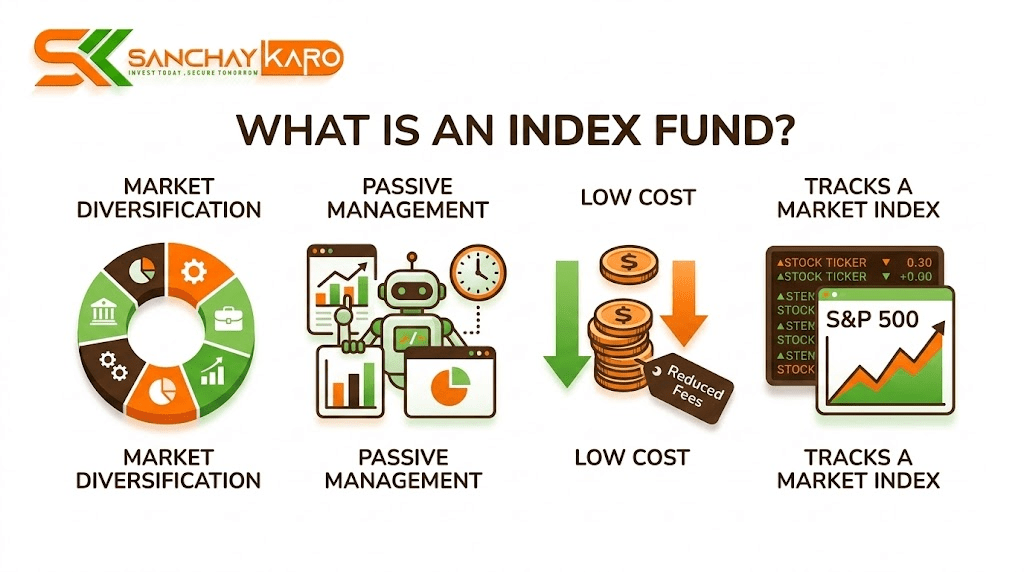
Again, back to basics. How much volatility can you handle? And respect the law of reversion to mean and everything else is falling in place, frankly. That’s how it works. When we invest, right, so that space when you’re looking at the time horizon, you know, you have to be verymuch well prepared that in the next 10, 15 years, you know, market, as I said, it doesn’t really care about who’s predicting what. It has a market, as I said, it doesn’t really care about who’s predicting what. It has its own mind and if you respect the longevity of your investments and stay there for the next many, many years, it’s very remote that you will go wrong, basically. You know, the best part about index is you’re not trying to find multi-baggers. You’re hugging the entire market. So you can’t go wrong there. And yeah, so it’s very important that we respect our own behavior and risk appetite rather than trying to predict how the market is going to behave, basically. So that’s the space we have to be very much well aware of.
While small and mid-cap index funds, they can add growth potential to a passive portfolio. They also demand a very different mindset, one that can handle volatility, long stretches of underperformance, as well as higher uncertainty. The key takeaway that I gather from your insights is that not every passive investor must own these funds, but if you do, it should be a deliberate well-sized decision made with clear expectations.
Absolutely. Very true, Ruchira. With that, we’ve reached the end of this conversation. Thank you, Mehran, for joining in and sharing your insights. The pleasure is mine, Ruchira. Thank you so much.