₹26 LAKH LOSS- How This Trader Lost Everything
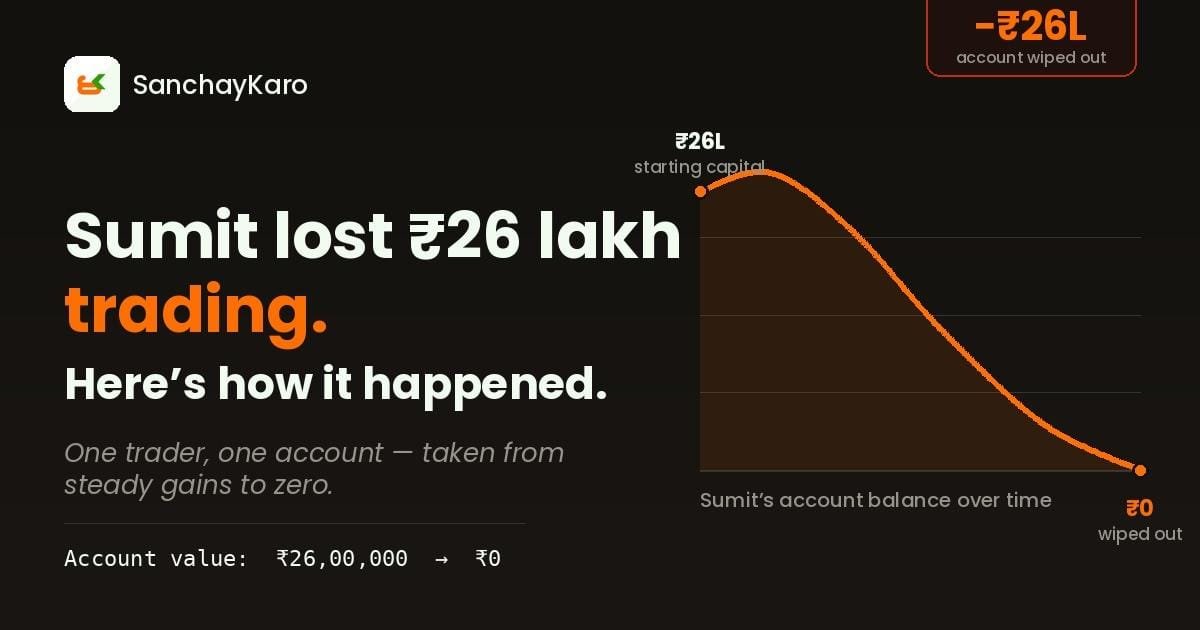
Trading often begins with a simple dream.Sumit started trading with ₹50,000 and quickly made profits. But expiry trades, Telegram tips, Hero Zero, greed, hope and borrowed money eventually turned his journey into approximately ₹26 lakh of trading-related debt.
“If I can make some extra money, my life will become better.”
For Sumit Suraj from Bhavnagar, Gujarat, that dream started with just ₹50,000.
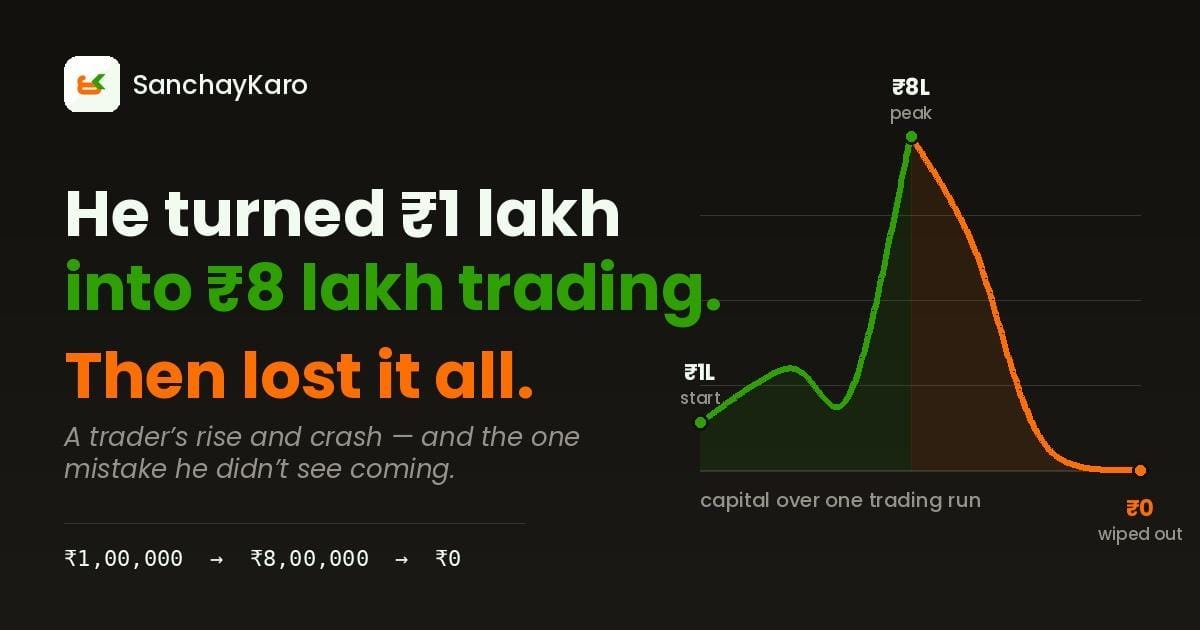
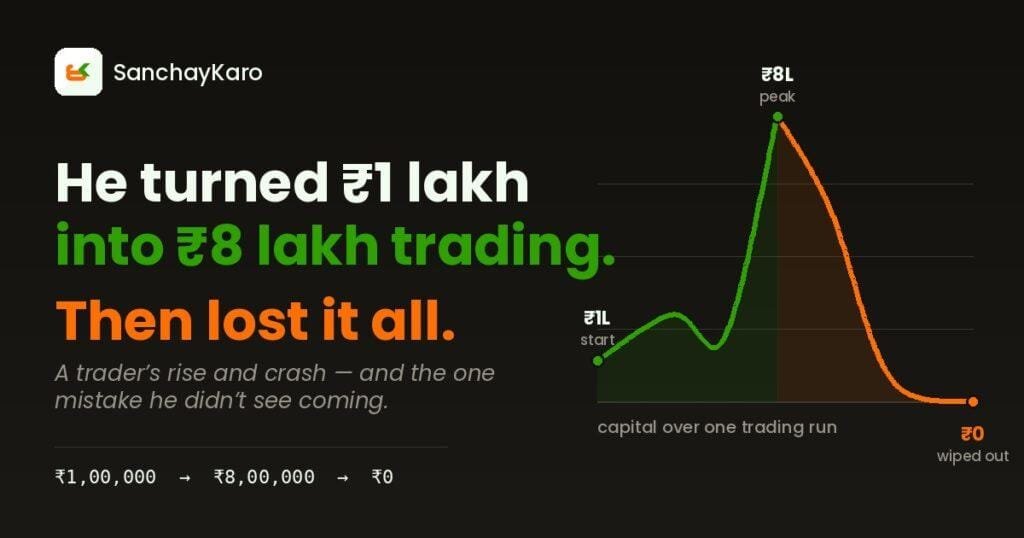
Within his first week, he says he made around ₹10,000–₹15,000. Soon, his ₹50,000 appeared to become approximately ₹1 lakh.
For someone new to the market, this can feel like proof that trading is the easiest way to change your financial life.
But that early success became the beginning of a much bigger problem.
Expiry trades followed. Losses followed. Then came Telegram advisory tips, borrowed money, Hero Zero trades, recovery attempts and increasing confidence after temporary profits.
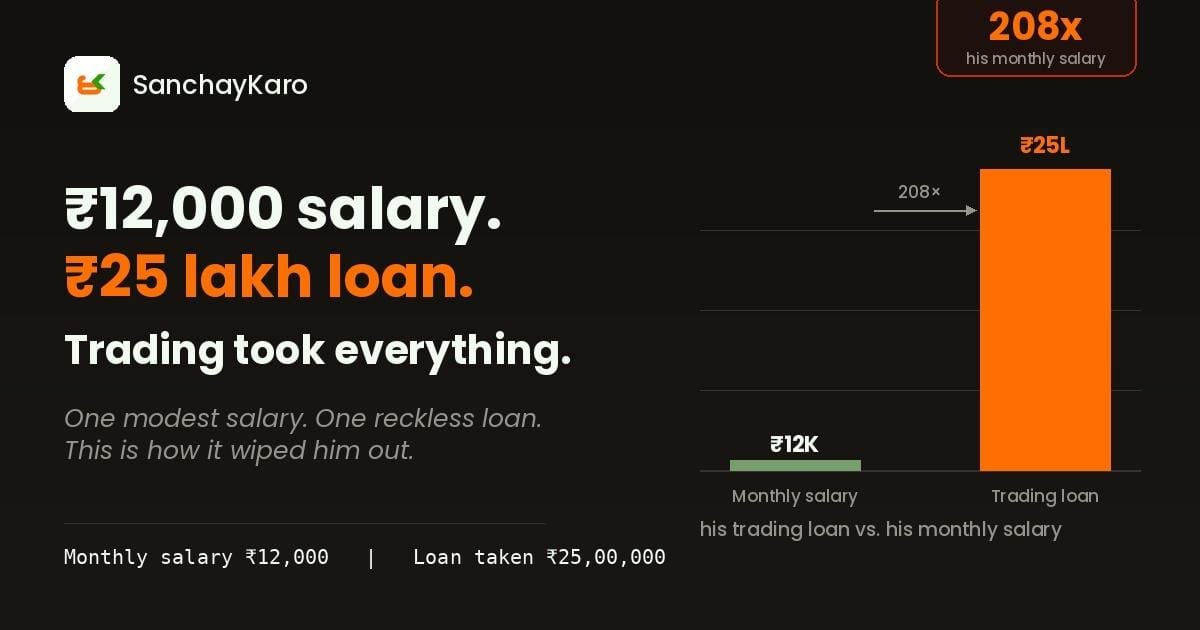
According to the interview, the journey eventually resulted in approximately ₹26 lakh of trading-related debt.
This is not simply a story about losing money.
It is a story about how hope, greed and the desire to recover losses can keep a person trapped in the same cycle.
Watch the full Bazaar Ke Haare episode on YouTube
From ₹50,000 to ₹1 Lakh in Just One Week
Sumit says his trading journey began around 2022.
A friend introduced him to the market. Sumit was completely new to trading, but after seeing his friend make money for a few days, he decided to invest ₹50,000.
The early experience was exciting.
The market went up, he bought accordingly. The market went down, he took trades in the opposite direction.
Within approximately one week, he says his ₹50,000 had doubled to around ₹1 lakh.
That was the first major psychological turning point.
When someone makes a large return quickly, especially without much experience, it can create a dangerous belief:
“If I can do this once, I can do it again.”
Sumit started believing that more money could be made from trading.
And that belief would later become difficult to control.
The First Big Expiry Loss
After making money, Sumit withdrew around ₹20,000.
Approximately ₹1 lakh remained.
Then came a Bank Nifty expiry trade.
He expected the market to move in his favour. Instead, the position went against him.
The result?
Approximately ₹70,000 was lost, leaving around ₹30,000.
The money he had originally started with had effectively disappeared.
But instead of stopping, another thought appeared:
“I made money before. I can recover this.”
That is where the recovery cycle began.
He added another ₹50,000.
That money was also lost.
Then he added another ₹1 lakh.
Again, there were periods of profit—₹8,000, ₹10,000, ₹12,000 and ₹15,000—but eventually another expiry day produced a loss of approximately ₹1 lakh.
When Trading Knowledge Was Replaced by Trading Tips
Sumit admits that he did not have enough knowledge when he started.
Initially, his friend was telling him what to buy and sell.
Later, he joined Telegram trading advisory groups.
The promise was familiar:
Take this call. Buy this Call. Buy this Put. This stock will move.
For the first few days, the calls sometimes appeared to work.
That created confidence.
But according to Sumit, the pattern later changed.
When trades started losing money, the advisory providers would reportedly say that the position would recover.
Eventually, he says, some stopped answering calls or blocked his number.
He says he paid different advisories approximately:
- ₹8,000
- ₹3,500
- ₹2,500
He estimates his net loss associated with advisory-based trading at around ₹3–4 lakh.
The important lesson is not simply about Telegram.
It is about outsourcing responsibility for your money.
If you do not understand why you are entering a trade, a profitable result can create false confidence, while a loss can leave you without a clear way to respond.
The ₹2 Lakh Loan That Changed Everything
Eventually, Sumit’s savings were exhausted.
He says he had used approximately ₹5 lakh of his own savings.
Then he borrowed.
A friend gave him approximately ₹2 lakh.
Instead of treating borrowed money differently from his own savings, Sumit put it into trading.
For around five to seven days, he remained in the market.
Then the entire capital was lost.
This is one of the biggest dangers in a trading-loss cycle:
Loss → Borrow → Trade → Loss → Borrow Again
The objective changes.
Initially, a person may enter the market to make money.
Later, the objective becomes:
“I need to get my money back.”
And that is a completely different psychological situation.
Hero Zero: The High-Risk Expiry Mindset
Another major part of Sumit’s story is Hero Zero trading.
He describes it as an expiry-focused approach where an option can potentially make a very large move, but can also become worthless.
According to the interview, Sumit estimates that approximately ₹10–12 lakh went into Hero Zero trading over time—not in a single trade.
The attraction is obvious.
A small amount can potentially become a large amount very quickly.
But the opposite can also happen.
A position can fall dramatically and leave the trader with little or nothing.
This creates an extremely dangerous psychological environment:
Small investment. Huge expectation. Huge emotional pressure.
His Father Warned Him: “This Is Gambling”
After losing the ₹2 lakh borrowed from his friend, Sumit says he needed money to repay him.
He approached his father and asked for approximately ₹3 lakh.
He told his father that he wanted to trade.
His father reportedly warned him:
“This is gambling.”
But Sumit still continued.
He restarted with around ₹1 lakh.
Then something happened that made the situation even more complicated.
For approximately five days, he says he made ₹40,000–₹50,000.
His capital reached around ₹1.5 lakh.
Once again, confidence returned.
He started thinking:
“If I double this money, I can repay my father.”
But the same pattern returned.
An expiry trade wiped out approximately ₹1 lakh.
Then another ₹50,000 disappeared.
Eventually, the capital again reached zero.
The ₹10 Lakh Borrowing
At this stage, Sumit had already lost significant amounts.
But the biggest escalation came when he borrowed approximately ₹10 lakh from a close relation.
He explains that this person had previously received help from him when times were good. When Sumit was struggling, that person helped him in return.
The problem was that the money was ultimately put into trading.
And according to Sumit, the entire amount was lost.
The interview describes approximately:
- ₹2 lakh from a friend
- ₹3 lakh from his father
- ₹10 lakh from another close relation
That alone totals around ₹15 lakh borrowed money.
The larger story, including previous losses and other borrowing, is described in the interview as approximately ₹26 lakh of trading-related debt.
The Biggest Enemy Was Not the Loss — It Was Hope
One of the most powerful parts of Sumit’s story is his answer to a simple question:
What is more dangerous—loss or hope?
His answer:
Hope.
Why?
Because after losing money, hope tells you:
“One more trade can recover everything.”
That thought can keep someone in the market long after they should have stopped.
Sumit says that after major losses, he continued believing that something would eventually happen and he would recover the money.
This is the recovery trap.
You don’t trade because the opportunity is good.
You trade because you want your previous money back.
And once borrowed money is involved, the emotional pressure becomes even greater.
Why ₹5,000 Profit Can Become a Problem
Another important lesson from the interview is greed.
Suppose someone makes ₹5,000 in a short period.
Instead of being satisfied, the mind starts thinking:
“Why only ₹5,000?”
Then:
₹5,000 → ₹10,000 → ₹20,000 → ₹50,000 → ₹1 lakh.
The target keeps moving.
Sumit explains that the market may give a trader ₹5,000, but the trader may refuse to accept it because they want more.
This creates a dangerous problem:
The market doesn’t necessarily have to defeat you.
Your own expectations can defeat you.
The Problem With a Fixed Daily Profit Target
One of the strongest lessons in the interview is about daily income expectations.
If someone earns ₹30,000 a month from a job, they may start thinking:
“If I can make ₹30,000 from my job, trading should give me ₹3 lakh.”
That expectation changes everything.
Now every trading day becomes a test.
If the trader makes nothing, they feel they failed.
If they make ₹2,000, they want ₹5,000.
If they make ₹5,000, they want ₹10,000.
The target keeps increasing.
The interview argues that experienced traders should not approach trading with a fixed mindset of “I must make this much money today.” Instead, trading is described as a skill involving a system, defined targets and risk management.
YouTube Learning Is Not the Same as Experience
Sumit says he watched YouTube videos trying to understand concepts such as:
- Liquidity
- Hammer candles
- Support
- Market direction
- Large stocks
- News
For a while, he tried to build his decisions around these concepts.
Eventually, his own experience led him to question whether simply identifying a particular candle or chart pattern could reliably predict what would happen next.
This is an important distinction.
Learning about markets is valuable.
But watching videos does not automatically create trading skill.
A person can understand terminology and still make poor financial decisions.
Knowledge without discipline can become another form of overconfidence.
The Cycle That Took Sumit Toward ₹26 Lakh
Looking at the entire story, the pattern becomes clear:
₹50,000 starting capital
↓
Early profits
↓
Confidence
↓
Expiry trading
↓
Large loss
↓
Recovery mindset
↓
More capital
↓
Telegram advisory tips
↓
More losses
↓
Borrowed money
↓
Hero Zero trading
↓
Temporary profits
↓
Renewed confidence
↓
More borrowing
↓
More trading
↓
More losses
↓
Approximately ₹26 lakh trading-related debt
The most dangerous part is that the trader doesn’t necessarily feel like they are making the same mistake every time.
Every new trade feels like the opportunity to fix the previous trade.
But the previous loss is already gone.
Trading Shows the Dream of Money—But Doesn’t Guarantee Money
One of the key messages from Sumit’s story is simple:
Trading can show the dream of making money, but that does not mean money will actually be made.
The market does not know that you have a loan.
It does not know that you need to repay your father.
It does not know that your friend is waiting for his money.
It does not know that you want to recover ₹10 lakh.
The market simply moves.
The emotional pressure exists inside the trader.
That is why borrowing money to chase trading losses can become so dangerous.

What Can We Learn From Sumit’s ₹26 Lakh Loss Story?
1. Early success does not prove skill
Making ₹10,000 or ₹15,000 during your first week does not mean you have mastered the market.
Sometimes early success can actually increase risk-taking.
2. Never turn a loss into a recovery mission
A loss should not automatically create another trade.
The question should be:
“What went wrong?”
not:
“How quickly can I get the money back?”
3. Be extremely careful with borrowed money
Trading with borrowed money adds another layer of pressure.
Now you are not only trying to make profits.
You are trying to satisfy a financial obligation.
4. Don’t blindly follow tips
Someone else’s trading call cannot replace your own understanding of risk.
A few successful calls can create confidence that may disappear when the market changes.
5. Hero Zero can create unrealistic expectations
The possibility of a very large return from a small amount can make high-risk trading extremely attractive.
But the possibility of losing most or all of that amount is equally important.
6. Don’t set an unrealistic daily income target
The market doesn’t owe you ₹5,000, ₹10,000 or ₹1 lakh every day.
A daily target can encourage unnecessary trades.
7. Hope can keep a losing cycle alive
Sometimes stopping is more difficult than losing.
The belief that “one more trade will recover everything” can be the most expensive belief of all.
Why Sanchay Karo Focuses Only on Mutual Fund Investment
This is where Sanchay Karo takes a completely different approach.
The philosophy is not:
Trade more.
It is not:
Recover your losses quickly.
It is not:
Find the next multibagger.
And it is not:
Make money every day.
The focus is much simpler:
Save. Invest. Stay Consistent. Grow.
Sanchay Karo focuses only on mutual fund investment because long-term investing does not need the same daily pressure associated with constantly buying and selling short-term positions.
The objective is to encourage a disciplined investment habit.
Instead of asking:
“How much can I make today?”
The investor can ask:
“How consistently can I invest for my long-term goals?”
SIP: Turning Investment Into a Habit
A Systematic Investment Plan, or SIP, can help investors build a regular investment habit.
Instead of waiting for the perfect market opportunity, an investor can invest according to a planned schedule.
The philosophy is based on:
- Regular investing
- Long-term thinking
- Goal-based planning
- Diversification through mutual funds
- Avoiding unnecessary leverage
- Avoiding emotional loss recovery
- Staying consistent
Of course, mutual funds are market-linked investments and are not guaranteed to generate profits. Investors should understand the risks and choose investments according to their goals and risk tolerance.
From “Make Money Fast” to “Build Wealth Slowly”
Sumit’s story represents a mindset many people can understand.
A person sees someone making money quickly.
Then they think:
“Why can’t I do it?”
They enter the market.
They make some money.
Their expectations increase.
Then a large loss comes.
Instead of stopping, they try to recover.
Eventually, the amount at risk becomes larger than they originally imagined.
Sanchay Karo’s philosophy starts from the opposite direction.
Don’t chase money.
Build a habit.
Don’t chase recovery.
Build discipline.
Don’t depend on one lucky trade.
Stay invested for the long term.
The Real Cost of a Trading Loss Is Not Always the Money
₹26 lakh is a large number.
But the real cost of a major financial loss can go beyond the amount shown in a bank account or trading statement.
It can affect:
- Family relationships
- Trust
- Sleep
- Mental peace
- Future financial plans
- Borrowing capacity
- Career decisions
- Personal confidence
That’s why financial decisions should never be judged only by the potential profit.
The downside matters too.
Final Lesson From Sumit’s Story
Sumit’s journey began with ₹50,000.
The first week brought confidence.
The losses brought the desire for recovery.
The recovery mindset brought more trades.
More trades brought borrowing.
Borrowing brought pressure.
And pressure made it harder to stop.
According to the interview, the result was approximately ₹26 lakh of trading-related debt.
The biggest lesson is therefore not simply:
“Don’t trade.”
It is:
Don’t let a loss control your next financial decision.
Don’t borrow simply to recover.
Don’t increase risk because you lost yesterday.
Don’t believe that one big trade will solve everything.
And don’t confuse a few successful trades with a sustainable financial strategy.
Because sometimes the biggest financial mistake is not the first loss.
It is everything you do after the loss.
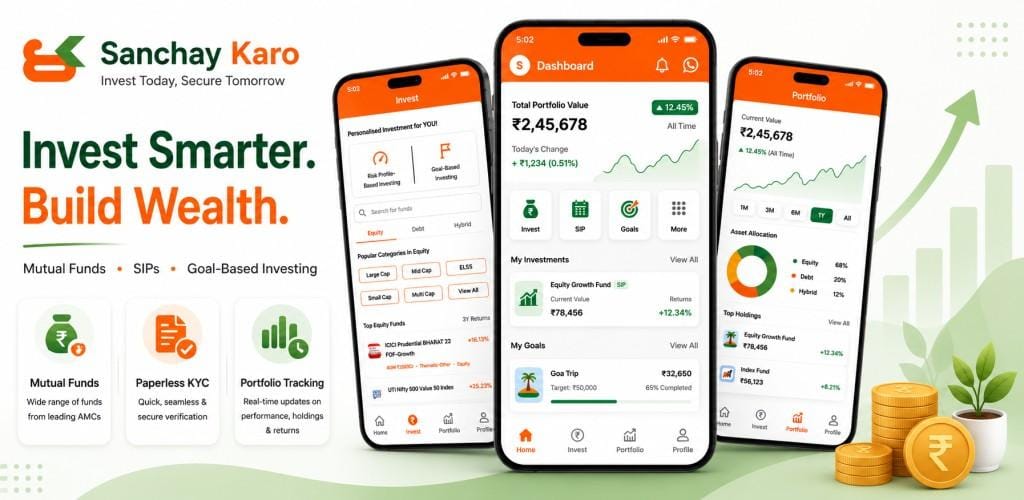
Sanchay Karo: A Different Financial Mindset
The purpose of Sanchay Karo is to promote a simpler approach to investing:
Save. Invest. Stay Consistent. Grow.
No obsession with daily profit.
No pressure to recover yesterday’s loss.
No need to keep increasing the size of a trade.
Instead, the focus is on creating a disciplined habit of mutual fund investment and staying committed to long-term financial goals.
The goal is not to become rich overnight.
The goal is to build financial discipline over time.
Watch the Full Story
Watch the full “₹26 LAKH LOSS: How This Trader Lost Everything — Sumit’s Story” episode on YouTube
Disclaimer
This article is an editorial adaptation of the supplied “₹26 LAKH LOSS: How This Trader Lost Everything (Sumit’s Story)” interview/transcript. Statements about Sumit Suraj’s trading activity, profits, losses, borrowing, advisory services, debt, and personal experiences are presented as described in the source and have not been independently verified.
This article is intended for financial awareness and educational purposes only and should not be considered financial advice. Trading, derivatives and other market activities involve substantial risk, and past performance does not guarantee future results.
Mutual funds are also subject to market risks. Investors should read all scheme-related documents carefully and consider their own financial goals and risk tolerance before investing.
Sanchay Karo is built around the principle: Save. Invest. Stay Consistent. Grow.